
burger

Latest

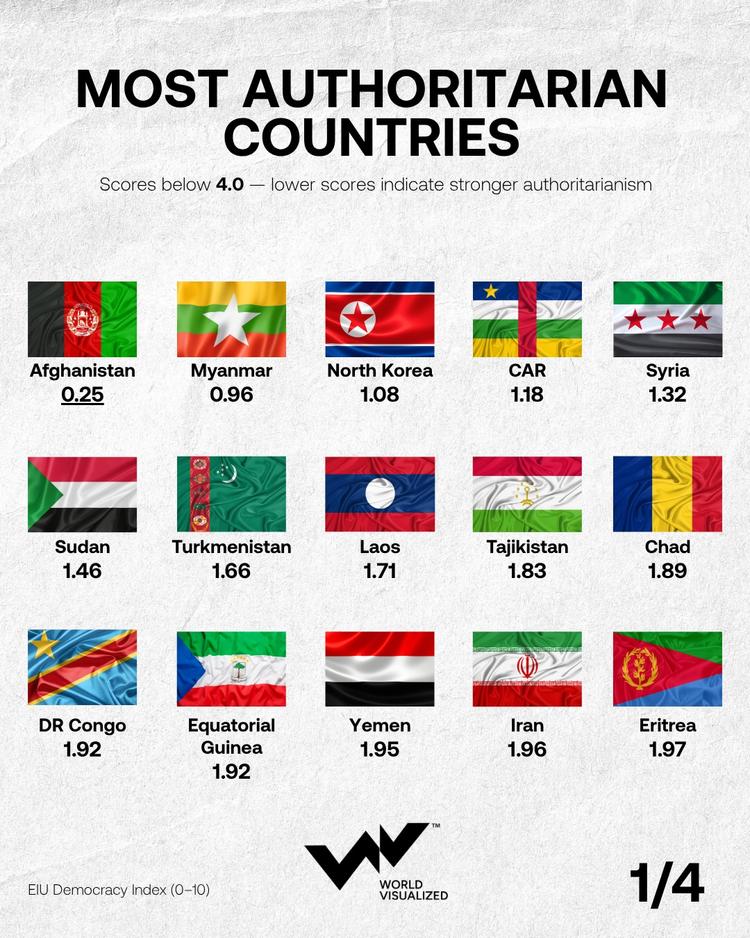
The world’s most authoritarian states
A cluster of countries across Asia, Africa and the Middle East continues to dominate the lower end of global democracy rankings, underscoring a persistent divide in governance standards worldwide, according to data compiled from the Economist Intelligence Unit (EIU) Democracy Index and World Population Review.
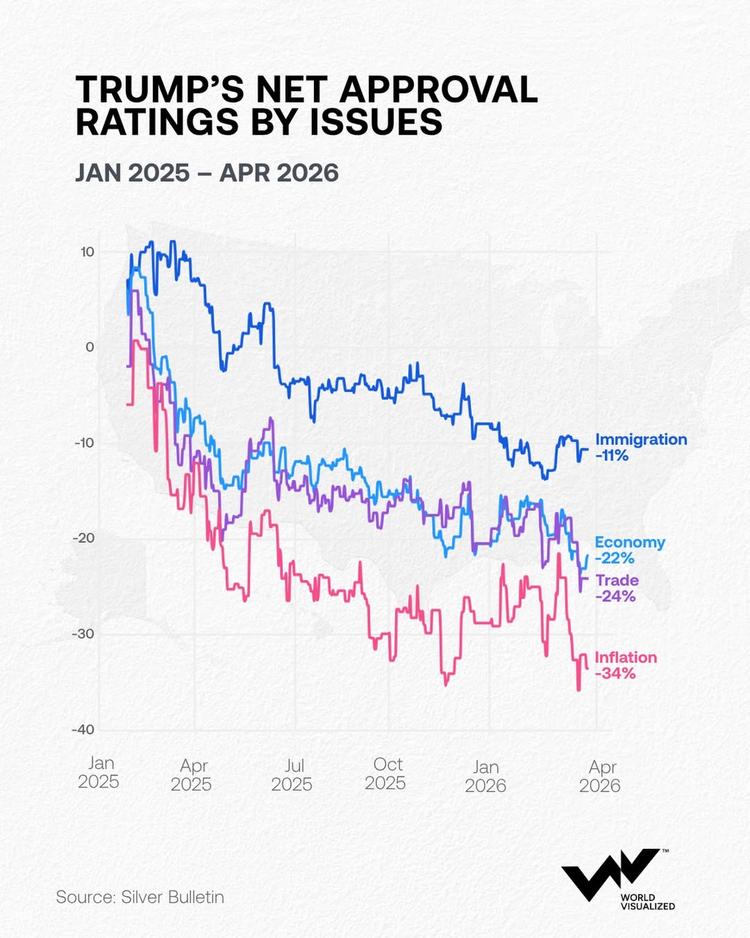
Donald Trump’s approval ratings dip
U.S. President Donald Trump’s approval ratings across major policy issues have deteriorated sharply over the past year, with new aggregated polling data from Nate Silver’s Silver Bulletin showing broad-based declines driven largely by economic concerns and inflation.
All from Politics

India dominates global party membership as others struggle to keep up
Political parties across the world are amassing unprecedented membership numbers, with India emerging as the clear centre of gravity in global party mobilisation.
Image
The world has experienced all forms of war over the years; however, World War II remains the most expensive conflict in U.S. history when adjusted for inflation, costing roughly $4.7 trillion, according to historical estimates.
Image
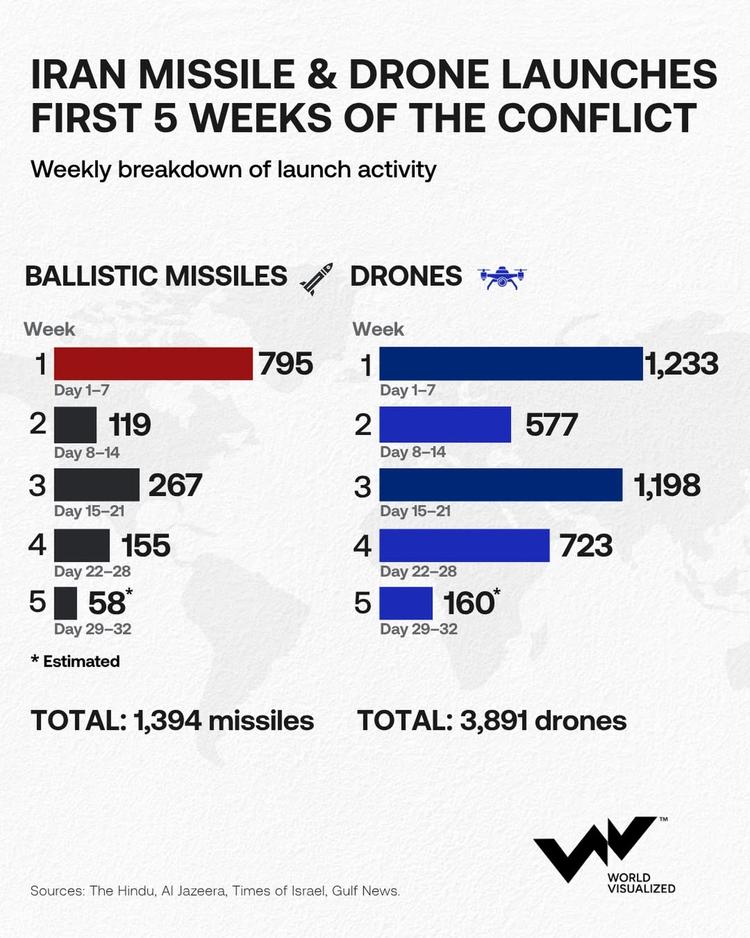
Escalating tensions across the Middle East have drawn renewed attention to the scale and reach of Iran’s missile and drone operations in the region.
Image
More than 20 countries across Asia, the Middle East, Europe, Africa and Latin America have been bombed by the United States since 1945.
Image
As of February 2026, the global nuclear balance stands at a critical juncture, with the world’s largest nuclear powers holding thousands of warheads just as cornerstone arms-control agreements move towards expiration.
Image
The United States has dominated headlines in recent years, but rarely for calm or consensus.
Image
The Holocaust was not confined to one place or one population. It was a continent-wide genocide that erased Jewish communities across Europe, country by country, family by family.
Image
The Holocaust stands as one of the most thoroughly documented crimes in human history. During the Second World War, Nazi Germany built a network of death camps designed not for detention, but for systematic, industrial-scale killing.
Image
Deaths inside US Immigration and Customs Enforcement detention facilities are often debated in political terms, yet across administrations, people have continued to die while in government custody, raising persistent questions about medical care, oversight, and the use of detention itself.

We help influential brands to tell their stories

Partner with us