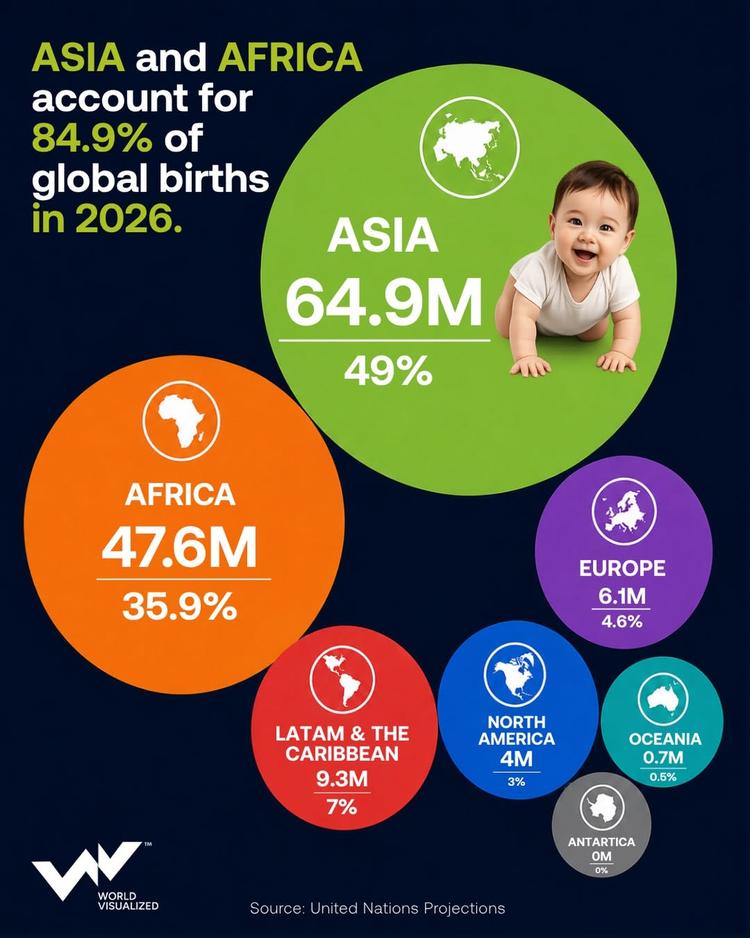
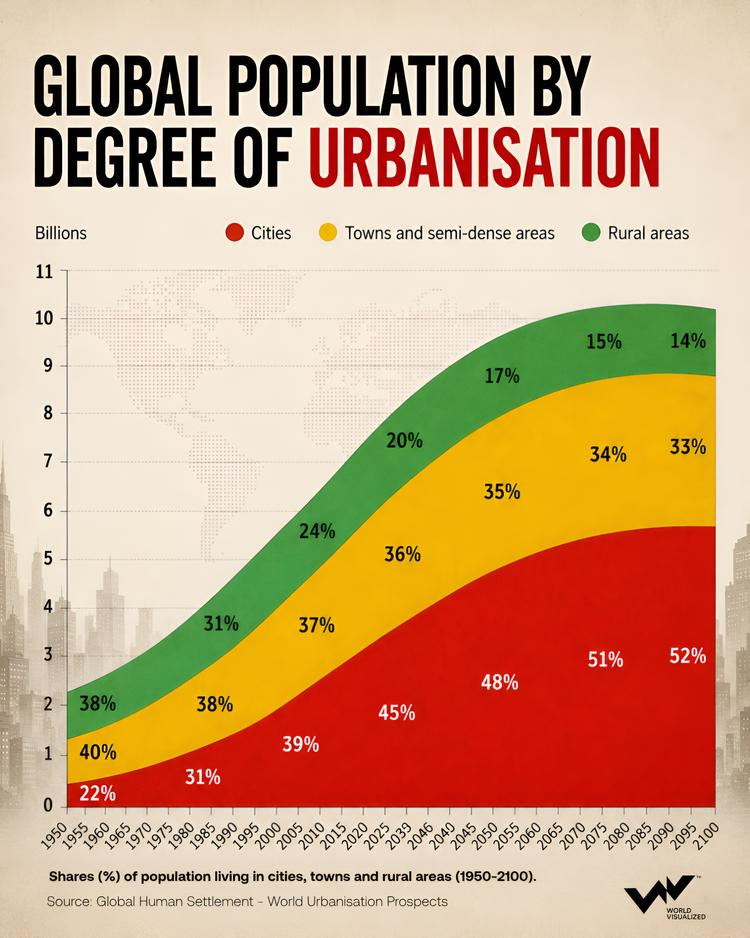
Global population growth is entering a new phase as the United Nations World Population Prospects projects that the world’s population will reach about 10.1 billion people by 2100, with almost all net growth coming from Africa, while Europe and parts of Asia decline.
Latest
All from Population
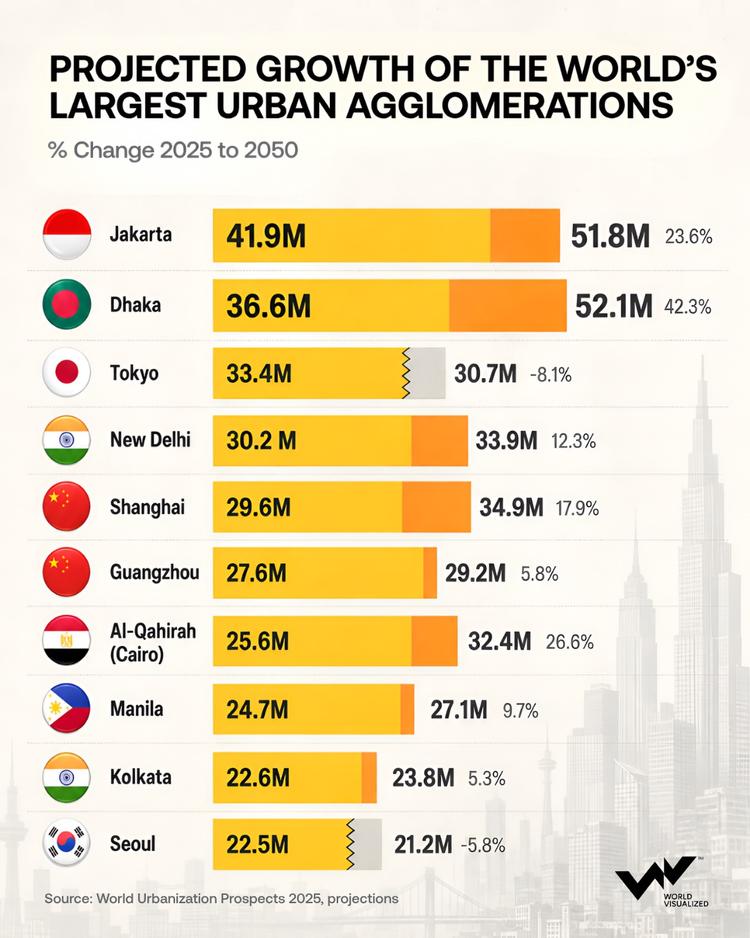
The world is undergoing an unprecedented urban transformation, with several cities now exceeding 15 million residents. Megacities such as Istanbul, Lagos, Guangzhou, Shenzhen, Beijing, Karachi, Delhi, and Shanghai are experiencing the most moves. The Cities in Numbers
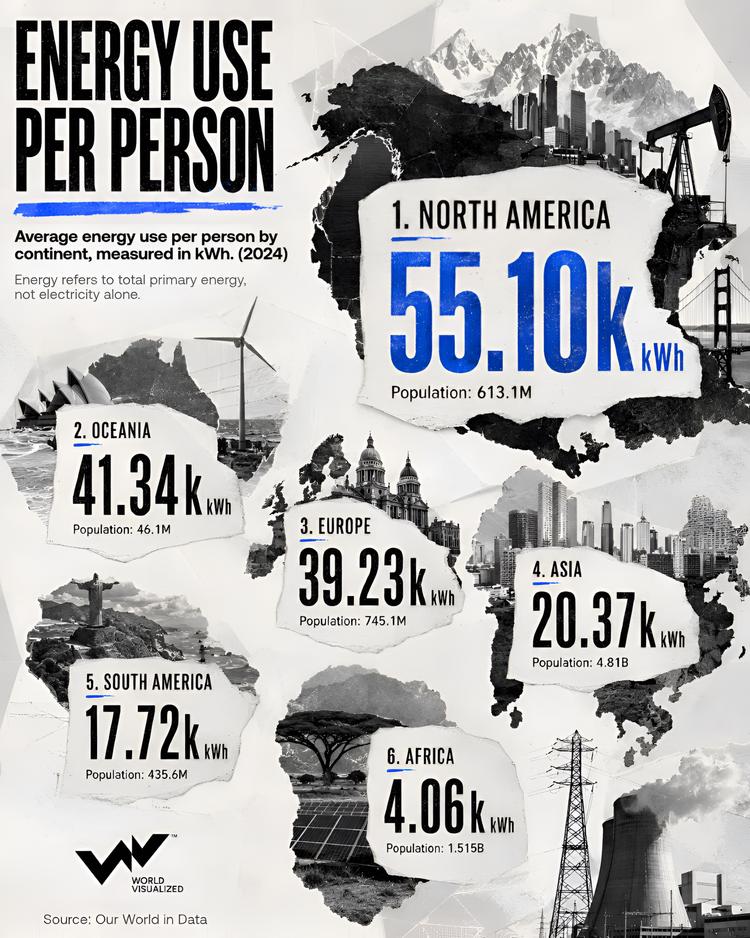
Do you count your calories? Every individual has different needs, based on their height, weight, lifestyle and other factors. But whether they can fulfil those needs often depends on where they live.
World Visualized’s graphic charting the median age of the global population from 1950 to 2025 shows a steady rise: from around 22 years in 1950 to more than 30 years in 2025. The pattern highlights how advancements in healthcare and education, combined with declining fertility rates, are transforming societies worldwide.
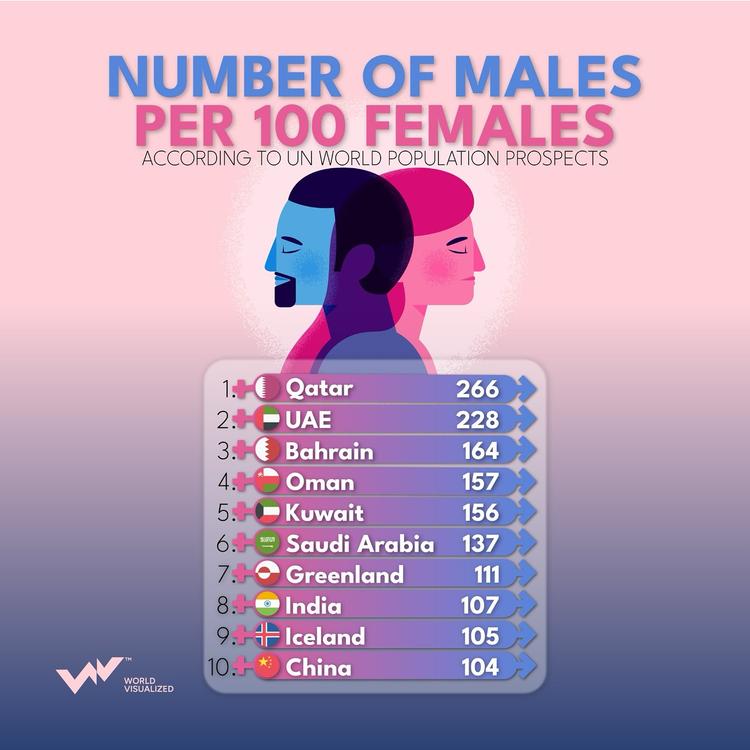
There are notable imbalances between male and female populations across several countries in 2025.
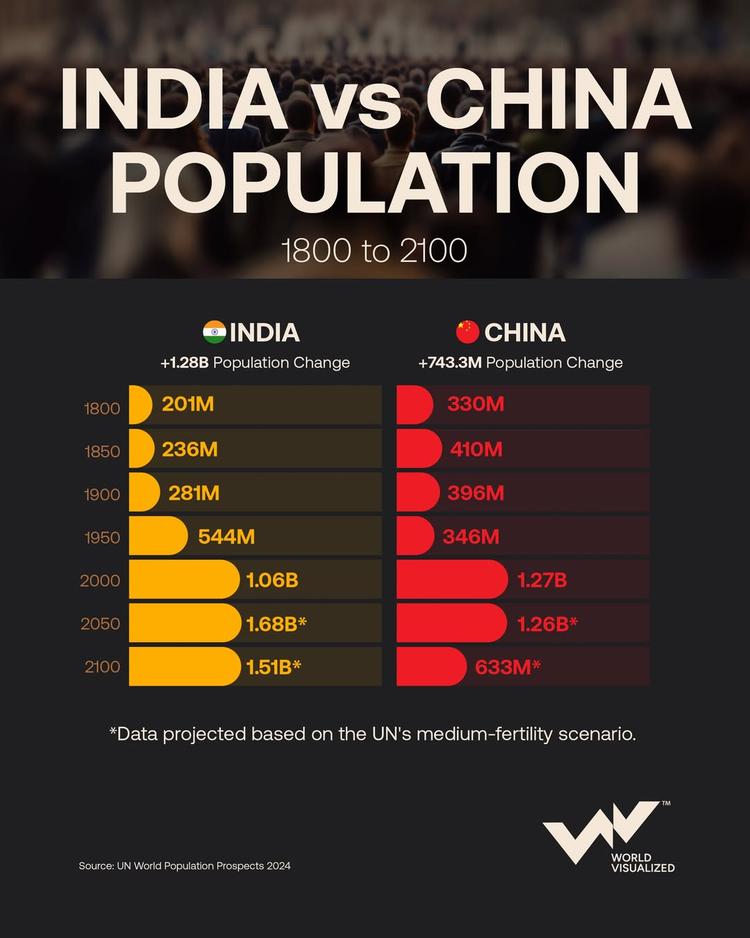
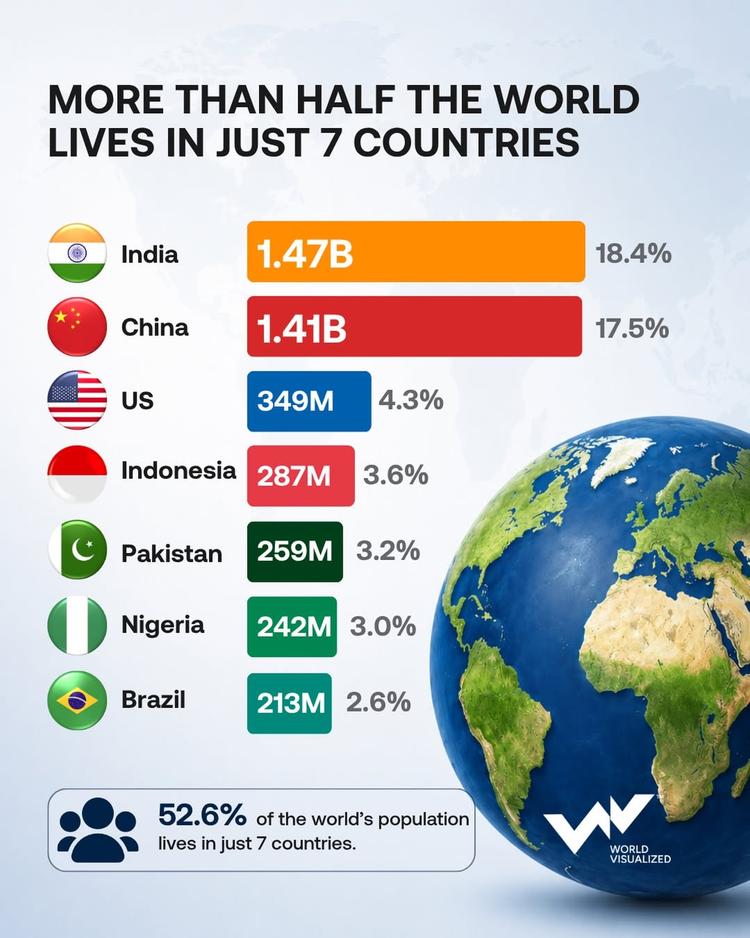
India has officially become the most populous country on Earth, overtaking China with a 17.76% share of the global population, according to Worldometer. China follows closely at 17.72%, while the United States remains a distant third at 4.23%.
The world has slowly grown to pay attention to only two religions: Christianity and Islam. These two religions have 2.3 billion and 1.9 billion followers, respectively, globally.
In a world where faith remains a powerful cultural force, recent data from World Population Review and Catholic World Mission highlight the countries with the largest Catholic populations. Unsurprisingly, Brazil emerges at the top of the list, boasting a staggering 140 million Catholics.
Although meat remains a primary source of protein in many regions, seafood—including fish and other edible marine species—has steadily gained popularity as a widely consumed protein alternative.
Finland now leads the world in Alzheimer's and dementia-related death rates, with 54.65 deaths per 100,000 people. The findings highlight a growing global health crisis as populations age and neurodegenerative diseases continue to rise sharply.
The Growing demand for pork and other pig products has steadily increased the global pig population over the years. As of 2022, the top pig-producing countries accounted for over 70% of the world's total pig population.
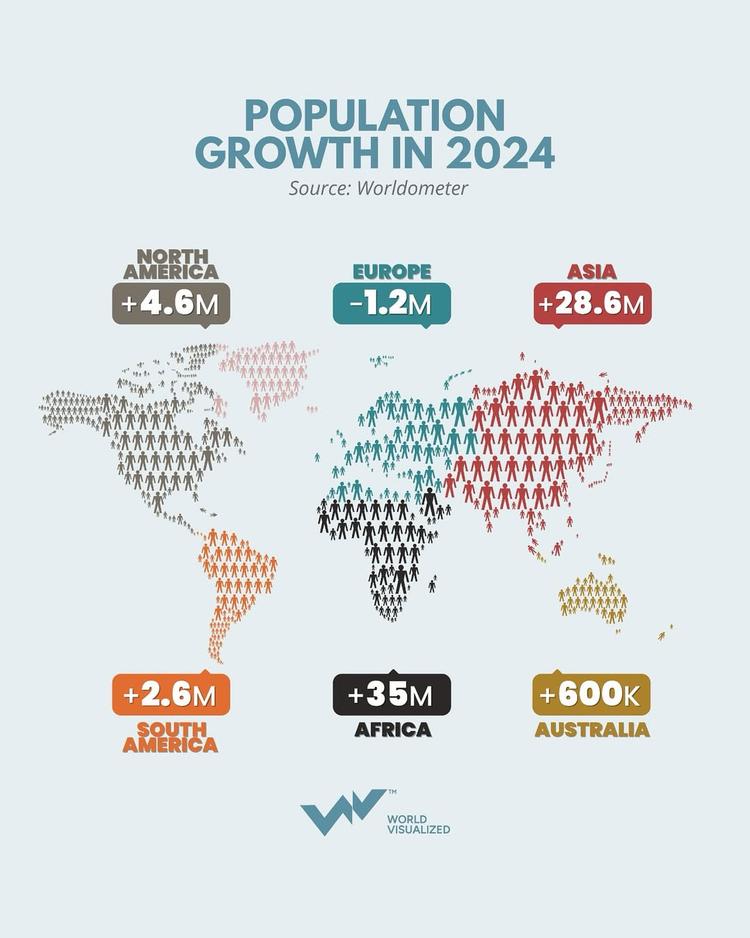
According to data from Worldometer, the global population significantly increased in 2024, reaching approximately 8.16 billion by the end of the year. This represents an increase of about 70.24 million people from the previous year, reflecting a growth rate of 0.87%.
According to the United Nations, global life expectancy at birth has experienced significant changes across various regions. As of 2024, the average life expectancy at birth worldwide is 73.3 years, with females averaging 76.0 years and males 70.7 years.
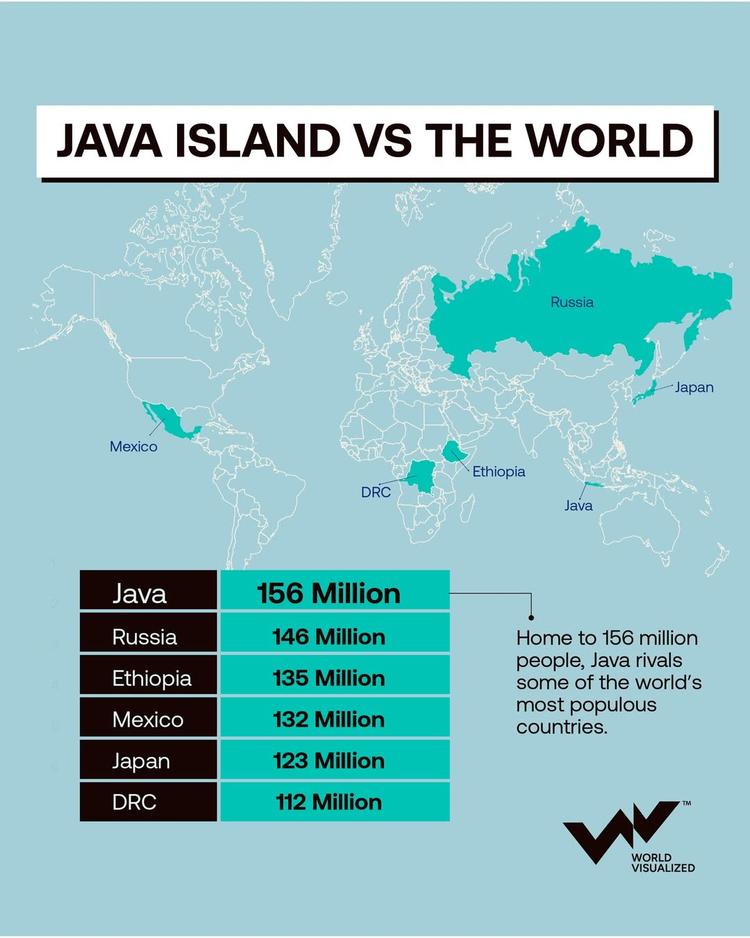
Islands, by their very nature, are landforms surrounded by water, yet many of them are teeming with human activity and dense populations.